
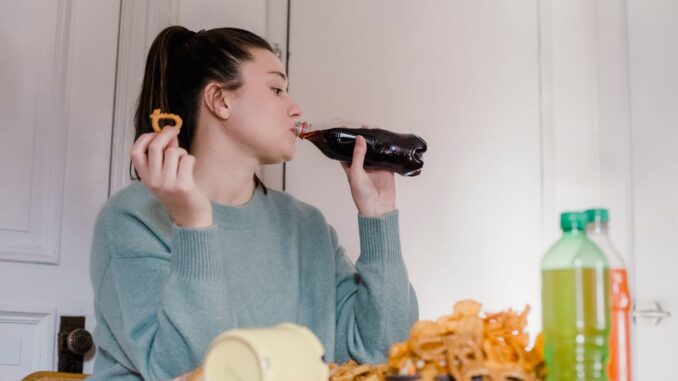

Food addiction remains one of the most misunderstood challenges in modern health care. Many people assume that individuals who struggle with overeating simply lack discipline. Others believe food addiction is entirely psychological.
Both explanations miss important pieces of the puzzle.
The reality is that, more often, food addiction involves a complex interaction between biology, behavior, environment, and modern food manufacturing practices than simply a conditioned craving for food.
Understanding these drivers is essential if we hope to address obesity, Type 2 diabetes, and other health issues related to metabolic disorders effectively.
Conventional medical discussions often focus on calories and portions.
The underlying assumption is straightforward: consume more calories than you burn and weight gain occurs.
While technically true, this explanation provides little insight into why people continue
overeating despite understanding the consequences.
Human beings are not calculators.
They are biological organisms driven by powerful survival mechanisms.
One of the most important involves the brain’s reward system.
Foods are formulated to activate pathways associated with motivation and reinforcement. In the evolutionary setting, these pathways evolved to encourage behaviors that improved survival. The challenge is that modern food products often stimulate these pathways far more intensely than natural foods.
Manufacturers design products to maximize palatability.
The predetermined combination of sugar, salt, fat, flavorings, and texture creates foods that encourage repeated consumption, especially when there is no immediate adverse consequences.
Consumers often describe feeling unable to stop eating after taking the first bite.
This response is not accidental.
It is the result of deliberate engineering.
Another important factor is habit formation.
Many people eat for reasons unrelated to hunger.
Stress.
Boredom.
Loneliness.
Celebration.
Convenience.
Over time, eating becomes associated with emotional states and daily routines.
The behavior becomes automatic.
Food addiction also involves environmental influences.
Modern consumers are surrounded by food cues.
Advertisements appear constantly. Snacks are available everywhere in conveniently packaged, and presented in attractive displays. Portion sizes continue to increase.
The environment encourages eating even when biological hunger is absent.
These factors combine to create conditions that make overeating remarkably easy.
Perhaps the most overlooked contributor is the mismatch between human evolution and the modern food supply.

The brain evolved in a world where calorie-dense foods were rare.
Today’s environment provides unlimited access to products specifically designed to stimulate consumption.
Our biology has not had time to adapt.
The result is predictable.
People experience cravings, overeat, gain weight, and develop metabolic diseases.
Then they blame themselves.
This self-blame is often misplaced.
Understanding food addiction requires recognizing that human behavior emerges from the interaction of biology and environment.
The solution is not simply telling people to try harder.
The solution is helping them create environments that support healthier choices.
This may involve reducing exposure to ultra-processed foods that contain unnatural combinations and concentrations of essential nutrients, prioritizing whole foods, recognizing emotional triggers, and understanding how reward systems influence behavior.
When individuals understand the true drivers of food addiction, they often experience a profound shift in perspective.
They stop viewing themselves as failures.
They begin viewing themselves as human beings responding to biological systems that evolved for true enjoyment of eating for survival from the day they were born until the day they die, one meal at a time.
That shift does not remove responsibility.
But it does replace shame with understanding.
And understanding is often the first step toward lasting change.
If we hope to reverse the epidemics of obesity, Type 2 diabetes and cardiovascular problems we must move beyond simplistic explanations and acknowledge the powerful forces that influence eating behavior.
Only then can meaningful solutions emerge.
John Poothullil practiced medicine as a pediatrician and allergist for more than 30 years, with 27 of those years in the state of Texas. He received his medical degree from the University of Kerala, India in 1968, after which he did two years of medical residency in Washington, DC and Phoenix, AZ and two years of fellowship, one in Milwaukee, Wisconsin and the other in Ontario, Canada. He began his practice in 1974 and retired in 2008. He holds certifications from the American Board of Pediatrics, The American Board of Allergy & Immunology, and the Canadian Board of Pediatrics.During his medical practice, John became interested in understanding the causes of and interconnections between hunger, satiation, and weight gain. His interest turned into a passion and a multi-decade personal study and research project that led him to read many medical journal articles, medical textbooks, and other scholarly works in biology, biochemistry, physiology, endocrinology, and cellular metabolic functions. This eventually guided Dr. Poothullil to investigate the theory of insulin resistance as it relates to diabetes. Recognizing that this theory was illogical, he spent a few years rethinking the biology behind high blood sugar and finally developed the fatty acid burn switch as the real cause of diabetes.Dr. Poothullil has written articles on hunger and satiation, weight loss, diabetes, and the senses of taste and smell. His articles have been published in medical journals such as Physiology and Behavior, Neuroscience and Biobehavioral Reviews, Journal of Women’s Health, Journal of Applied Research, Nutrition, and Nutritional Neuroscience. His work has been quoted in Woman’s Day, Fitness, Red Book and Woman’s World.Dr. Poothullil resides in Portland, OR and is available for phone and live interviews.To learn more buy the books at: amazon.com/author/drjohnpoothullil
Visit drjohnonhealth.com to learn more. You can also contact him at john@drhohnonhealth.com.
Or follow us on:
Instagram: instagram.com/DrJohnOnHealth
Facebook: facebook.com/JohnOnHealth
Youtube : @DrJohnPoothullil
For more great lifestyle content, see here.
Explore more insights at https://www.usadailychronicles.com/.



Leave a Reply