
INTERVIEW ON THE PRICE OF BUSINESS SHOW, MEDIA PARTNER OF THIS SITE.
Recently Kevin Price, Host of the nationally syndicated Price of Business Show, welcomed Dr. Ann Hester to provide another commentary in a series.
The Dr. Ann Hester Commentaries
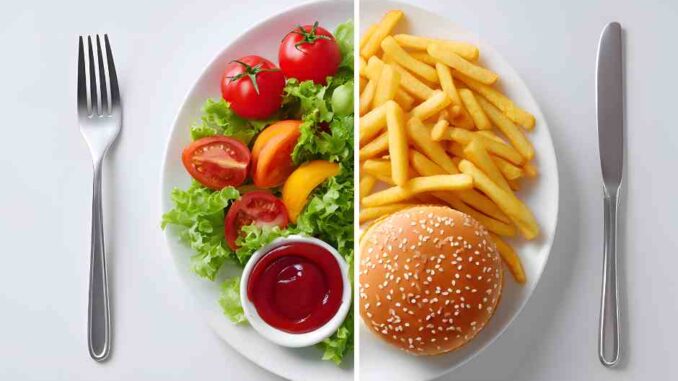
Have you ever stopped to consider not just how many calories are in a meal, but how those calories actually fill you up? A thousand calories can mean two heaping plates of food—or a single greasy burger and fries that leave you sluggish and craving more. That’s the power of calorie density.
Calorie density is simply how many calories are packed into a pound of food. At one end of the spectrum, you’ve got lettuce at about 60 calories per pound. On the other, olive oil tips the scales at over 4,000 calories per pound. Your stomach doesn’t care about calories—it cares about volume. It has stretch receptors that send your brain the “I’m full” message once enough food fills the space. The secret is this: when you eat fiber-rich, nutrient-dense foods like fruits, vegetables, beans, and whole grains, you fill your stomach before you overload on calories.
Think of your body like a Porsche. Would you pump in the cheapest fuel you could find? Of course not. You’d invest in premium because you know it protects your investment, lowers maintenance costs, and helps the car last longer. Your body is infinitely more valuable than any luxury car. And just like that Porsche, it thrives on premium fuel.
Unfortunately, many of the foods common in the Standard American Diet—aptly nicknamed “SAD”—do the opposite. A typical fast-food combo meal can easily run 1,200–1,500 calories, much of it from fat, refined carbs, and added sugars. These foods stretch your stomach but offer little in terms of vitamins, minerals, or fiber. Over time, they raise your risk for obesity, type 2 diabetes, heart disease, stroke, and even certain cancers .
On the flip side, studies show that diets built around low–calorie-density foods not only promote healthy weight but also reduce inflammation, improve cholesterol, and help protect against chronic disease . For example, people who follow plant-predominant diets rich in fruits, vegetables, legumes, and whole grains consistently live longer and have lower risks of heart disease and cancer .
And this isn’t just about weight loss. When you choose foods that pack the most nutrition into each bite, you’re literally giving your cells what they need to repair, restore, and thrive. That means more energy, better mental clarity, and a longer healthspan.
So the next time you sit down to eat, think beyond calories. Ask yourself: am I filling my tank with premium fuel that will help me thrive, or with cheap fuel that risks breaking down my most precious vehicle—my body?
Define your vision, then act with precision.
References
World Health Organization. Obesity and overweight. 2021.
Centers for Disease Control and Prevention. Poor Nutrition. 2023.
Rolls BJ. The relationship between dietary energy density and energyintake. Physiol Behav. 2009.
Barnard ND, et al. Plant-based diets for weight management:Effectiveness and mechanisms. Nutrients. 2019.
Willett W, et al. Food in the Anthropocene: the EAT–Lancet Commission onhealthy diets from sustainable food systems. Lancet. 2019.
Ann M. Hester, M.D. is a board-certified internist with over 25 years of experience. She obtained her medical degree from the University of Tennessee in Memphis. Dr. Hester believes when patients are taught exceptional “patient skills,” they become empowered to play a previously unimagined role in optimizing their medical care and minimizing medical costs. Her mission is to share these critical skills by various means, thereby improving patient outcomes and strengthening the U.S. healthcare system. This mission started in medical school when she witnessed the tremendous gap between how patients and doctors think. Over the years, she has written various patient empowerment pieces online and through books. Her latest book is Patient Empowerment 101: More than a book, it’s an adventure! This unique work takes an unprecedented step in helping people think more like doctors and position themselves at the center of their healthcare team.
Learn more at https://www.patientempowerment101.com.
Connect with her through social media:
Twitter: @patientworldnet
LinkedIn: https://www.linkedin.com/in/patientempowerment101
For more great lifestyle content, see here.
Explore more insights at https://www.usadailychronicles.com/.


